
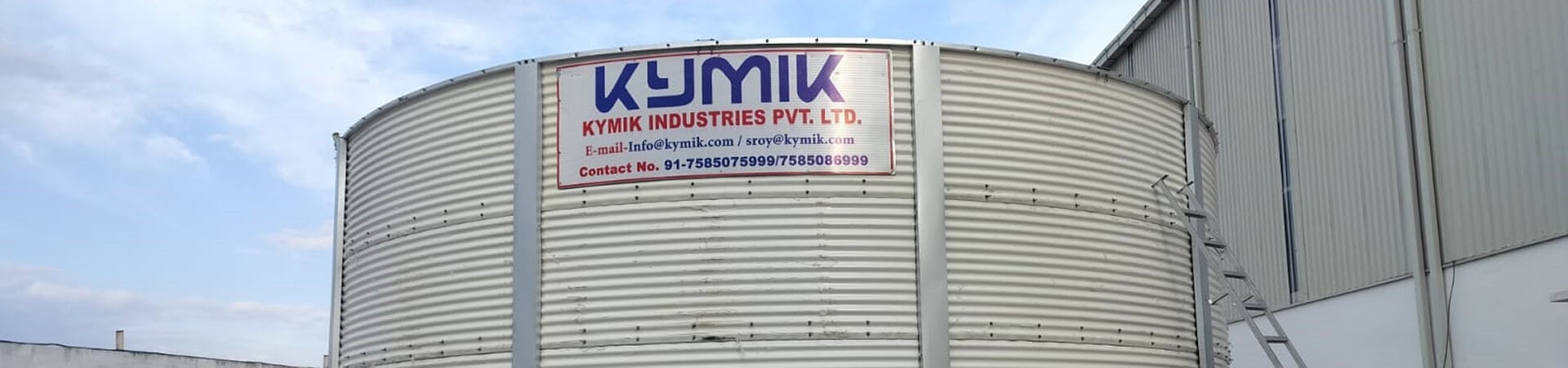

GFS Tanks for ZLD Plants: industrial wastewater storage tanks
Glass-Fused-to-Steel tanks
GFS tanks for ZLD plants provide durable and corrosion-resistant storage solutions for industrial wastewater treatment and water recovery systems. As industries adopt sustainable water management practices, Zero Liquid Discharge (ZLD) technology helps reduce wastewater discharge and recover valuable water for reuse.
However, ZLD facilities often handle wastewater containing dissolved salts, industrial chemicals, and concentrated contaminants. Therefore, selecting suitable industrial wastewater storage tanks is essential for safe containment and reliable plant operation.
Kymik Industries Pvt. Ltd. provides Glass-Fused-to-Steel tanks for suitable ZLD, Effluent Treatment Plant (ETP), and Sewage Treatment Plant (STP) applications. These tanks combine the structural strength of steel with the protective properties of glass enamel. Additionally, their modular construction supports flexible storage capacities and efficient project execution.
As a provider of engineered industrial tank solutions, Kymik supports wastewater treatment projects through material selection, design, manufacturing coordination, and installation assistance.
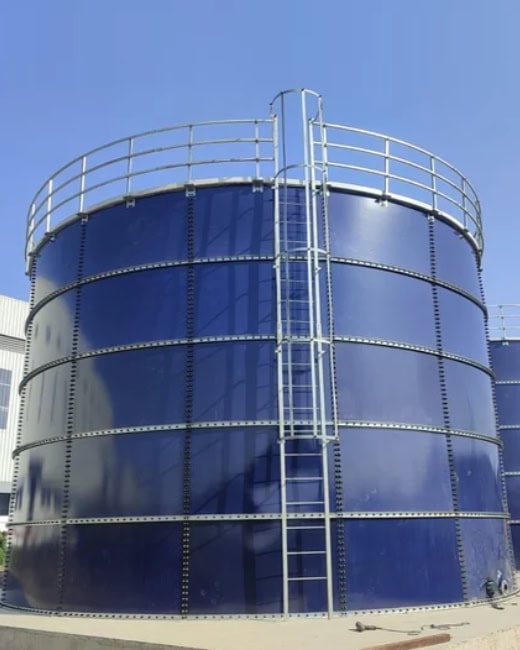
Table of Contents
What Is a Zero Liquid Discharge Plant?
A Zero Liquid Discharge plant is an advanced wastewater treatment system designed to recover reusable water while eliminating liquid wastewater discharge from the treatment process.
Industries use ZLD technology to manage wastewater, conserve freshwater resources, and support environmental compliance.
A typical ZLD plant combines physical, chemical, membrane, and thermal treatment technologies. These processes separate contaminants from wastewater and recover water for suitable industrial reuse.
The remaining concentrated waste undergoes further treatment to produce solid residues for appropriate handling and disposal.
How Does a Zero Liquid Discharge Plant Work?
A ZLD system generally includes the following stages:
- Wastewater Collection: Industrial wastewater enters dedicated collection tanks before treatment.
- Equalization and Pretreatment: The system balances flow variations and removes selected contaminants.
- Membrane Filtration: Suitable membrane technologies recover water and concentrate dissolved impurities.
- Evaporation: Thermal processes remove additional water from concentrated wastewater.
- Crystallization: The remaining dissolved salts form solid residues for further handling.
- Water Recovery: Recovered water returns to suitable industrial processes.
Throughout these stages, storage tanks manage wastewater flow and provide containment between treatment processes.
Therefore, reliable ZLD wastewater storage tanks play an important role in maintaining operational continuity.
Why Choose Glass-Fused-to-Steel Tanks for ZLD Plants?
Glass-Fused-to-Steel tanks combine steel strength with a protective glass enamel coating. During manufacturing, controlled high-temperature firing fuses the enamel to the steel substrate.
This process creates a durable surface that helps protect the underlying steel against corrosion.
The coating also provides resistance to many chemical environments. Consequently, GFS technology can support suitable industrial wastewater applications where conventional materials may require additional protection.
Furthermore, factory-prepared panels allow manufacturers to maintain controlled coating processes. Installation teams then assemble the panels at the project site using bolted connections and compatible sealing materials.
However, wastewater characteristics vary significantly between industries. Engineers must therefore verify coating compatibility, pH, operating temperature, and chemical exposure before selecting a GFS tank.
Key Benefits of GFS Tanks for ZLD Plants
1. Corrosion Resistance for Industrial Wastewater
ZLD systems frequently handle wastewater containing dissolved salts, treatment chemicals, and other contaminants.
The glass enamel coating forms a protective barrier over the steel substrate. This barrier helps reduce direct exposure to compatible stored liquids.
As a result, GFS wastewater tanks can provide reliable containment for selected wastewater treatment applications.
2. Durable Steel Construction
Industrial treatment facilities require tanks that can withstand internal water pressure and applicable environmental loads.
GFS tanks use structural steel panels to provide mechanical strength. Engineers also consider wind loads, seismic conditions, and other relevant site requirements during design.
Proper engineering and installation help support dependable long-term operation.
3. Reduced Coating Maintenance
Conventional painted steel tanks may require periodic surface treatment and repainting.
In comparison, GFS tanks use a factory-fused glass coating that does not depend on conventional field-applied paint.
This characteristic can reduce coating-related maintenance. However, operators must still inspect panel joints, sealants, bolts, and other critical components.
4. Modular Installation and Flexible Capacities
GFS tanks use modular bolted-panel construction. Individual panels travel to the project site and form the tank structure during assembly.
This approach simplifies transportation and reduces extensive on-site fabrication.
Moreover, modular configurations can accommodate different storage volumes according to project requirements.
5. Smooth Surface for Easier Cleaning
The glass enamel creates a smooth, non-porous surface. This finish helps simplify cleaning and reduces opportunities for deposits to adhere.
However, actual cleaning requirements depend on wastewater composition and operating conditions.
Applications of GFS Tanks in ZLD Wastewater Treatment
Different stages of a ZLD system require different storage capacities and operating conditions.
GFS tanks for ZLD plants can support several treatment functions when the selected materials match the stored wastewater.
1. Wastewater Collection Tanks
Collection tanks receive wastewater from industrial production processes before treatment begins.
These tanks help maintain an organized flow of wastewater into the treatment system. Suitable GFS configurations can provide containment for compatible industrial effluent.
2. Equalization Tanks
Equalization tanks help balance changes in wastewater flow and composition.
They provide temporary storage before downstream treatment. Additionally, suitable mixing arrangements can help maintain consistent wastewater characteristics.
Kymik can develop GFS tank configurations based on the required volume and process conditions.
3. Intermediate Wastewater Storage Tanks
ZLD facilities may require storage between filtration, chemical treatment, and other processing stages.
These tanks help manage flow variations and maintain continuity between treatment operations.
GFS tanks can support compatible intermediate storage applications based on the liquid characteristics.
4. Treated Water Storage Tanks
Recovered water often requires temporary storage before industrial reuse.
Suitable GFS tanks can provide storage for treated process water and other compatible recovered-water applications.
The selected tank specification must meet the intended water quality requirements.
5. Concentrated Wastewater Storage Tanks
Some ZLD processes generate concentrated wastewater containing elevated levels of dissolved salts and chemicals.
These streams require careful material selection. Therefore, engineers must confirm the suitability of the glass coating, seals, fittings, and operating temperature.
A standard GFS tank may not suit every concentrated wastewater application.
Industrial Wastewater Storage Tanks Offered by Kymik
Kymik provides different storage technologies for industrial wastewater treatment projects. The appropriate solution depends on the stored media, operating environment, capacity, and project specifications.
Glass-Fused-to-Steel Tanks
Kymik provides Glass-Fused-to-Steel tanks for suitable industrial wastewater storage and treatment requirements.
Their glass enamel coating offers corrosion protection, while the steel structure provides mechanical strength.
These tanks can support compatible ZLD, ETP, STP, and industrial process water applications.
Zincalume Bolted Steel Tanks
Kymik manufactures Zincalume bolted-panel tanks using steel sheets with an aluminum-zinc-silicon alloy coating.
The typical coating contains 55% aluminum, 43.5% zinc, and 1.5% silicon. It helps protect the steel against atmospheric corrosion.
For selected wastewater applications, compatible internal liners can provide a protective barrier between the stored liquid and tank shell.
Industrial Tank Liner Systems
Certain wastewater streams require additional protection against chemical exposure.
Kymik can provide suitable liner systems according to the stored liquid and project requirements.
Engineers must verify liner compatibility with wastewater chemistry, operating temperature, and expected service conditions.
Customized Modular Tank Systems
Kymik develops modular tank configurations according to storage volume, available space, and operating requirements.
Project-specific components may include roof systems, manholes, nozzles, ladders, platforms, drainage connections, and monitoring accessories.
These options help clients integrate storage tanks into the overall treatment plant design.
Industries Using GFS Tanks for ZLD Plants
Industries generate wastewater with different chemical compositions and treatment requirements. Therefore, each sector requires suitable ZLD tank solutions.
Textile and Dyeing Industries
Textile processing produces wastewater containing dyes, salts, and chemical residues.
ZLD systems help recover reusable water and manage concentrated contaminants. GFS tanks can support compatible wastewater collection and treatment-stage storage.
Pharmaceutical Industries
Pharmaceutical facilities generate wastewater containing process chemicals, organic compounds, and dissolved substances.
These industries require careful wastewater characterization. Suitable GFS tank configurations can support selected storage and treatment applications.
Chemical Manufacturing Industries
Chemical plants may generate wastewater with variable pH, dissolved salts, and aggressive chemical compounds.
Consequently, tank selection requires detailed chemical compatibility assessment.
GFS tanks can support suitable applications when their coating and sealing specifications match the stored media.
Food and Beverage Industries
Food processing facilities produce wastewater containing organic matter, suspended solids, and cleaning residues.
ZLD technology can support water recovery and reuse. Meanwhile, suitable GFS tanks provide containment at selected wastewater treatment stages.
Power and Energy Industries
Power generation facilities may produce wastewater from cooling systems, boiler operations, and water treatment processes.
These facilities can use ZLD systems to recover water and manage concentrated residues.
Appropriate industrial water treatment tanks help support wastewater collection, intermediate storage, and recovered-water management.
Manufacturing and Processing Industries
Manufacturing plants often require wastewater storage before treatment and reuse.
Kymik develops project-specific storage configurations according to wastewater characteristics, required capacity, and operating conditions.
Factors to Consider When Selecting ZLD Wastewater Storage Tanks
Selecting suitable ZLD wastewater storage tanks requires careful evaluation of the treatment process and site requirements.
Wastewater Characteristics
Identify the wastewater’s chemical composition, Total Dissolved Solids (TDS), suspended solids, and potential contaminants.
These factors influence material compatibility and tank specifications.
pH and Chemical Compatibility
Different wastewater streams contain different acids, alkalis, salts, and treatment chemicals.
Therefore, engineers must verify the compatibility of tank coatings, seals, and other water-contact components.
Operating Temperature
Wastewater temperature can change between treatment stages.
The selected tank materials must withstand the expected operating temperature and relevant thermal variations.
Tank Capacity and Process Flow
Tank capacity depends on wastewater flow, retention time, treatment requirements, and operational schedules.
Accurate calculations help ensure sufficient storage between treatment stages.
Structural and Site Conditions
Engineers must consider hydrostatic pressure, wind loads, seismic conditions, foundation requirements, and site accessibility.
Proper design helps maintain structural stability throughout operation.
Accessories and Maintenance Requirements
Tank configurations may require inlet and outlet connections, drains, overflow arrangements, level instruments, access systems, and inspection points.
Suitable accessories help support operation, maintenance, and process integration.
Why Choose Kymik as Your GFS Tank Manufacturer for ZLD Projects?
Choosing a suitable GFS tank manufacturer is important for industrial wastewater treatment projects. Tank performance depends on engineering, material selection, manufacturing quality, and installation practices.
Kymik Industries Pvt. Ltd. provides engineered water storage solutions for industrial and infrastructure applications.
Project-Specific Tank Engineering
Kymik considers storage capacity, wastewater composition, site conditions, and structural requirements before developing a tank configuration.
This approach helps align the storage system with its intended application.
Multiple Industrial Tank Technologies
We provide GFS and Zincalume bolted-panel tank systems for different storage requirements.
Our team helps clients evaluate suitable materials and protective systems according to project specifications.
Customized Storage Solutions
Kymik develops tank configurations with suitable capacities, dimensions, roofs, nozzles, access systems, and other required components.
These options support integration with industrial wastewater treatment facilities.
End-to-End Project Support
Our services include consultation, engineering, fabrication, logistics, installation, and commissioning assistance.
This coordinated approach helps manage different stages of industrial tank projects.
Industrial Water Storage Experience
Kymik supports industrial, municipal, commercial, and infrastructure water storage requirements.
Our experience with modular steel tank systems helps us address different project capacities and installation conditions.
Conclusion: Reliable GFS Tank Solutions for Zero Liquid Discharge Plants
GFS tanks for ZLD plants provide corrosion-resistant storage solutions for suitable industrial wastewater treatment and water recovery applications.
Their glass-fused protective coating, structural steel construction, and modular design make them a practical choice for selected wastewater storage requirements.
From collection and equalization to intermediate storage and treated-water management, Glass-Fused-to-Steel tanks can support different ZLD treatment stages. However, material compatibility and project-specific engineering remain essential.
Kymik Industries Pvt. Ltd. provides engineered GFS wastewater tanks, Zincalume bolted-panel systems, and customized industrial wastewater storage tanks for industrial water management projects.
Contact Kymik Industries Pvt. Ltd. to discuss your ZLD wastewater storage requirements, tank capacity, operating conditions, and project specifications.
Explore our GFS Tanks and Waste Water Tanks to learn more about Kymik’s industrial storage solutions.