
Modular Tank vs Bolted Tank: Smart Storage Solutions
A modern home or business must prioritize water saving. In this sense, conventional overhead or subterranean water-carrying tanks have their share of space, mobility, and even expansion issues. Fortunately, the development of modular tanks has proven effective and long-lasting. In addition to being simple to move, assemble, and maintain, they offer substantial advantages over other traditional storage systems. Let’s discuss the advantages of a modular tank for contemporary water storage issues.
A Modular Water Tank: What Is It?
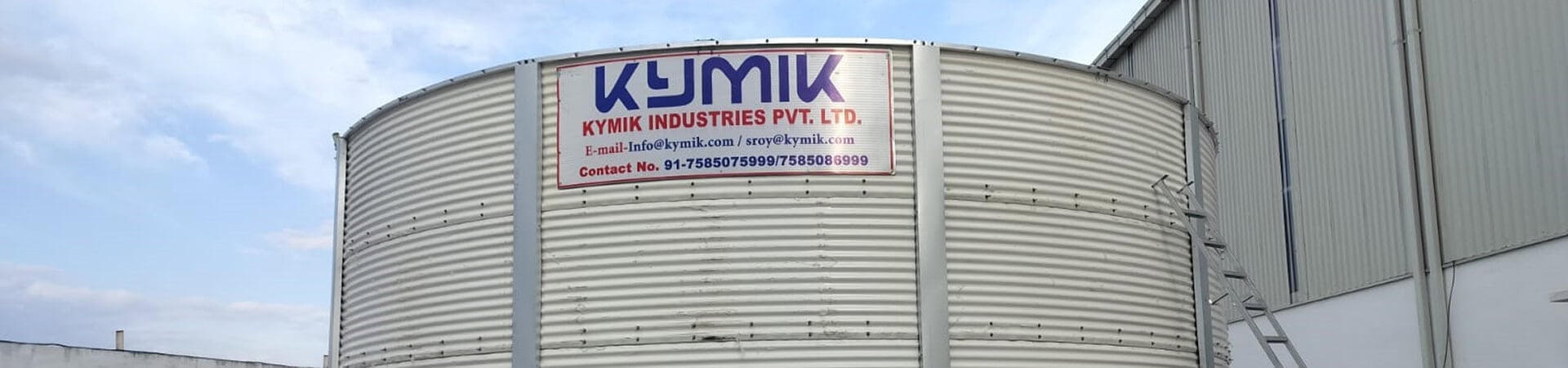
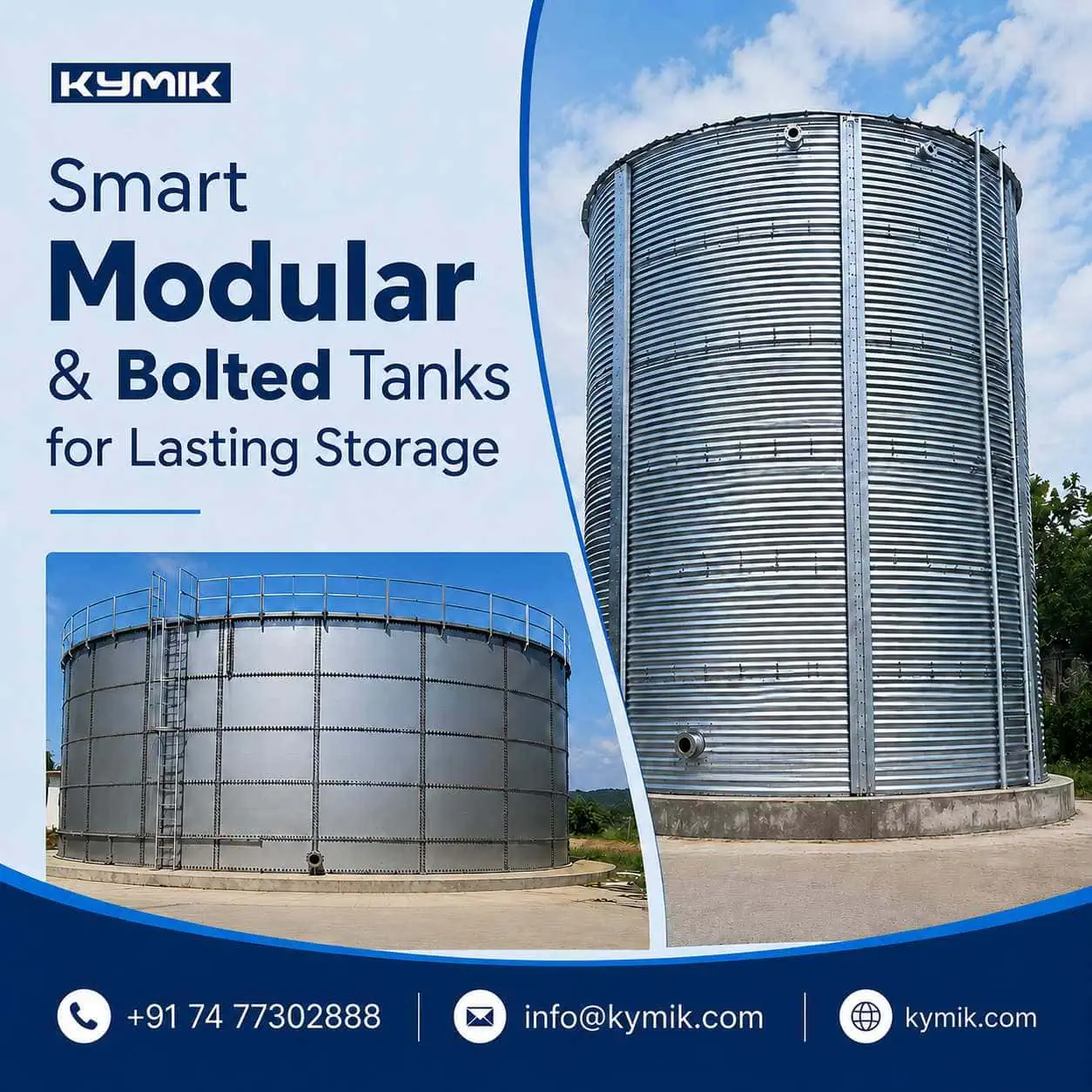
A modern water storage option, a modular water tank is made up of many panels that may be put together and joined to create a tank with a predetermined volume and dimension. These panels are often composed of steel, fiberglass, or high-density polyethylene plastic, which gives them durability and environmental resistance. Unlike traditional tanks, these tanks are more contemporary and efficient because they are simply assembled at the necessary location, which helps to overcome space and access limitations.
These tanks’s modular design makes it simpler to customize them for certain uses. Features like leak-proof and high-temperature-tolerant materials, as well as protective coatings, are often incorporated to guarantee improved performance under various circumstances. They are frequently utilized for water storage in homes, businesses, and even agricultural settings because of their usefulness and resource efficiency.
Major Advantages of Modular Water Tanks
In both household and industrial settings, modular water tanks are revolutionizing our understanding of water storage. The main advantages of a modular water tank are listed below:
Space-Efficient Design: Because modular tanks are so adaptable, they can be useful in spaces with limited space.
Easy Installation and Transportation: One of the main advantages of modular tanks that can be carried in sections is the reduction of transportation expenses. Because installation is done on-site in remote locations, labor and electricity expenses are also reduced, making assembly easier.
Expandable: Because the storage space may be enlarged to suit demands of the users, they no longer need to worry about it running out. Additional panels, including the ones that were originally installed, are all that are needed.
Weather Resistant: Because modular tanks are made of the best materials, they can withstand severe weather, corrosion, and UV rays. Because of this, these tanks have a far longer lifespan than traditional tanks.
Eco-Friendly: Because of their effective design, they only squander a small amount of water, making them environmentally viable.
Low Maintenance Needed: Because these tanks are made of premium materials and have a smooth surface that reduces the formation of algae, they require less cleaning and maintenance.
Cost-Effectiveness: These tanks are particularly cost-effective because of their increased modularity and strength, which also significantly reduce maintenance expenses. They are less expensive to buy and install than traditional tanks when taking into account their performance.
What is Bolted Tank?
Bolted tanks, sometimes also called “panel” or “sectional” tanks, are storage tanks manufactured in prefabricated, individual panels that are assembled at the site. The panels are not welded; they are bolted together with the help of special gasket and sealants.
Important Benefits of Bolted Tanks
Compared to their welded equivalents, bolted steel tanks have many advantages. These tanks offer outstanding value and usefulness, from improved corrosion resistance to ease of installation. The reasons bolted steel tanks are performing better than welded tanks across a range of industries are described below.
Easy Installation
Bolted tanks are simple and quick to install. Transportation and labor costs are decreased because the individual panels are readily moved to the location and assembled there. In the oil business, where time is the essence, this rapid installation time is particularly crucial.
Easy Maintenance
Bolted steel tanks need very little maintenance. The steel panels’ protective covering keeps rust and corrosion at bay, and replacing any damaged panels is simple and doesn’t require disassembling the complete tank.
Enhanced Resistance to Corrosion
Unmatched corrosion resistance is provided by bolted steel tanks, especially those composed of Glass Lined Steel (GLS) or Fusion Bonded Epoxy Coated (FBE). To ensure consistency and dependability, the coatings are applied in factory-controlled environments. The longevity of bolted tanks is constantly being improved by these developments in coatings and materials.
Cost-effective
A bolted tank is less expensive than other storage options like concrete or welded steel tanks. In the long run, they are an affordable storage option because they require less maintenance.
Durability
Bolted steel storage tanks are made to resist inclement weather and corrosive materials like oil. They are constructed with premium steel that has been shielded against rust and corrosion. For the oil business, this makes them a dependable and durable storage option.
Flexibility
Bolted tanks can be custom-made to meet specific needs, such as water treatment or oil storage. The number of panels can be changed to suit the needs, and they can be built in a variety of shapes and sizes. When working with constrained space or unique site conditions, this adaptability is critical.
Eco-Friendly
The environmental impact of bolted steel tanks is lower than that of welded tanks. During manufacturing and installation, the pre-engineered modular components produce minimal waste. Bolted tanks are also reusable, which reduces their overall environmental effect and is consistent with sustainable methods.
Conclusion
A modular tank is very adaptable, dependable, and effective. Because of its modular design and ease of installation and maintenance, it meets all contemporary water management needs. There is no denying the advantages of bolted steel tanks over welded ones. Bolted tanks are the best option for a variety of applications because of their superior installation convenience, affordability, durability, flexibility, and sustainability.