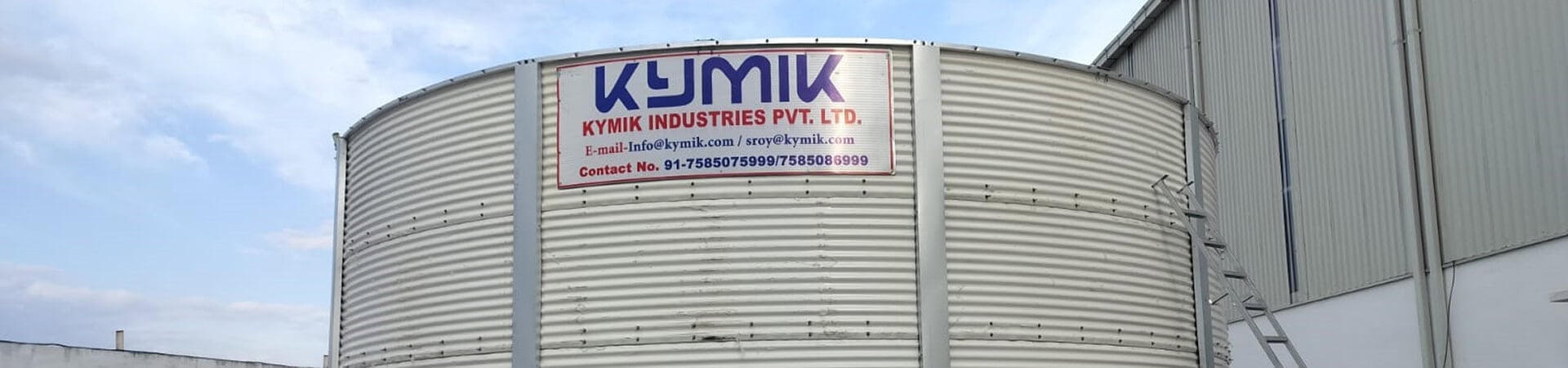
GFS tanks from Kymik provide durable storage solutions for industrial, municipal, water, and wastewater projects. Also known as Glass-Fused-to-Steel tanks, these systems combine the mechanical strength of steel with the protective properties of glass enamel. This combination creates a robust tank system for demanding storage environments.
Kymik provides GFS tanks in different capacities and configurations to meet project-specific requirements. Each tank can accommodate suitable nozzles, roofs, access systems, fittings, and other accessories. The final configuration depends on the stored media, operating conditions, site requirements, and required storage capacity.
As a GFS tank manufacturer, Kymik supports projects through engineering, material planning, supply, logistics, and installation. This integrated approach helps maintain consistency throughout the project, from initial design to final commissioning.
A Glass-Fused-to-Steel tank uses specially prepared steel panels coated with glass enamel. During manufacturing, controlled high-temperature firing permanently bonds the glass coating to the steel substrate. The process combines two materials with different properties into a single composite panel.
Steel provides the structural strength required to contain large volumes of liquid. Meanwhile, the glass enamel creates a hard protective surface over the steel. This surface limits direct contact between the steel substrate and the stored media.
The coating covers both sides of the steel panel according to the required manufacturing specification. Manufacturers carefully control surface preparation, coating application, firing, and inspection to achieve consistent panel quality.
After manufacturing, individual GFS panels form the tank shell through modular bolted connections. Suitable sealants create watertight joints between adjoining panels. This method allows teams to construct tanks in different diameters and heights according to the required capacity.
The performance of a GFS water tank depends heavily on the manufacturing and fusion process. Steel panels first undergo preparation to create a suitable surface for enamel application. The manufacturer then applies specially formulated glass enamel to the prepared steel.
The coated panels enter a controlled furnace, where high temperatures fuse the glass enamel with the steel substrate. Kymik’s GFS system uses firing temperatures in the range of approximately 820°C to 930°C, depending on the manufacturing specification.
This process forms a strong bond between the enamel and steel. After firing, the panels undergo relevant quality checks before they move to the next stage of production.
Factory preparation also allows manufacturers to complete critical coating work under controlled conditions rather than at the project site. The finished panels can then be packed and transported for assembly.
Industrial and wastewater storage can expose tank surfaces to moisture, chemicals, changing temperatures, and other demanding conditions. Material selection therefore plays an important role in tank performance.
The fused glass surface protects the underlying steel from direct exposure to suitable stored media. Unlike conventional painted surfaces, the enamel forms an integrated layer with the steel during the fusion process.
The steel core provides the mechanical strength required for large-capacity storage. Together, these properties make GFS storage tanks suitable for many municipal, industrial, wastewater, and environmental infrastructure projects.
However, every stored liquid has different characteristics. Kymik considers the media, temperature, chemical conditions, capacity, and operating environment when determining a suitable tank configuration.
Kymik uses modular bolted-panel construction for its GFS tanks. Factory-prepared panels reach the project site as individual components and form the cylindrical tank shell during assembly.
Installers align and bolt the panels according to the approved tank design. Suitable sealing materials create watertight joints between panels. The complete system can also include a roof, manhole, ladders, platforms, nozzles, inlet and outlet connections, overflow arrangements, and other project-specific accessories.
Modular construction simplifies the transportation of large storage systems. Instead of transporting a complete tank, teams can transport individual panels and components to the installation site.
This approach can benefit projects with large storage requirements or challenging transportation conditions. It also allows Kymik to develop different tank dimensions according to the required storage capacity and available site area.
Installation begins after the foundation and project site meet the approved requirements. Individual GFS panels and components then reach the site for assembly.
Installation teams assemble the panels according to the approved tank layout. They align adjoining panels, install bolted connections, and apply suitable sealing materials to create watertight joints.
The team then installs the required roof, access systems, nozzles, fittings, and other accessories. After completing the tank structure, relevant inspections and testing verify the installation before commissioning.
Kymik can provide installation supervision and technical support throughout this process.
Regular inspection helps maintain reliable performance throughout the tank’s service period. Operators should periodically inspect panel joints, sealants, bolts, fittings, accessories, and other critical components.
The glass-fused surface does not rely on conventional field-applied paint for its primary protective coating. This characteristic can reduce coating-related maintenance compared with systems that require periodic repainting.
However, maintenance requirements vary by application. Stored media, operating conditions, cleaning practices, site environment, and mechanical damage can all influence inspection requirements.
Following an appropriate inspection and maintenance schedule helps identify potential issues before they affect tank operation.
Kymik provides GFS tanks for projects that require a combination of steel strength, corrosion protection, and modular construction. The technology can support both water storage and demanding wastewater applications when specified correctly.
Every project has different requirements. Therefore, Kymik evaluates capacity, stored media, site conditions, operating environment, accessories, and structural requirements before developing the tank solution.

Our project support covers engineering, material supply, logistics, installation, and commissioning assistance. This approach enables Kymik to provide complete Glass-Fused-to-Steel tank solutions for industrial, municipal, wastewater, and infrastructure projects.

Glass enamel is fused to the steel at high temperatures. The resulting surface provides strong resistance to corrosion, chemicals, and environmental exposure.

Bolted panels simplify transportation and support faster on-site installation. The modular system can also support future expansion or relocation where technically feasible.

Smooth, non-porous glass surface helps maintain hygienic storage conditions while reducing scaling, bacterial growth and maintenance requirements.
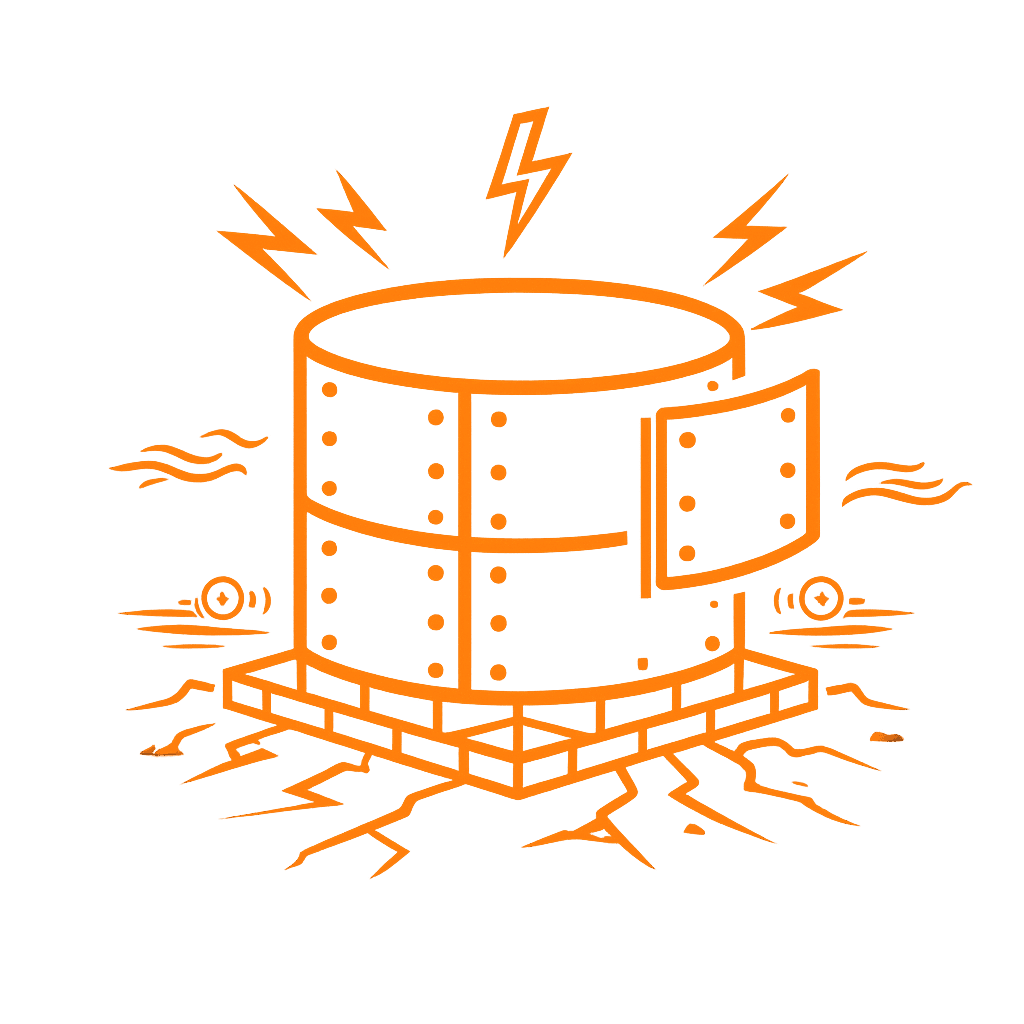
Kymik engineers each tank according to project and site requirements. The design considers relevant structural conditions, including wind and seismic loads.
GFS tanks provide a practical solution for projects that require corrosion resistance, structural strength, low maintenance, and modular installation.
A complete GFS tank system includes more than the tank shell. Kymik can provide suitable components and accessories according to the application and approved project design.
Tank configurations may include roof systems, external ladders, internal access arrangements, handrails, platforms, manholes, nozzles, inlet connections, outlet connections, overflow pipes, drains, and other required fittings.
The choice of accessories depends on tank capacity, operating requirements, inspection needs, stored media, and site conditions. Kymik coordinates these components with the overall tank design to provide a complete storage system.
Kymik Glass-Fused-to-Steel tanks can support a broad range of storage and treatment projects. The suitable application depends on the characteristics of the stored media and the selected tank specification.
GFS tanks can provide large-capacity storage for municipal and infrastructure water projects. Their modular construction makes them suitable for projects requiring different capacities and site configurations.
STP projects require reliable containment at different stages of wastewater treatment. GFS tanks can support suitable sewage treatment and wastewater storage requirements.
Industrial ETP systems handle wastewater generated by manufacturing and processing operations. GFS tank configurations can support suitable effluent storage and treatment stages based on the media characteristics.
Manufacturing and processing facilities often require dedicated storage for process and utility water. Kymik can configure GFS tanks according to capacity, operating conditions, and project requirements.
GFS tanks can provide dedicated water reserves for suitable fire protection systems. Tank capacity and configuration depend on the project’s fire water requirements and applicable specifications.
GFS technology can support suitable biogas and anaerobic digestion infrastructure. These applications require careful consideration of the stored media, process conditions, and tank configuration.
Waste management facilities may require dedicated storage for leachate and other wastewater streams. The tank specification must match the chemical characteristics and operating conditions of the stored media.
Suitable GFS tank configurations can support water and process storage requirements within food and processing facilities. The required specification depends on the intended application and storage conditions.
